









Axios Axios
- Dems’ Denver victory party previews 2028 battles
 by Holly Otterbein on November 15, 2026 at 10:50 pm
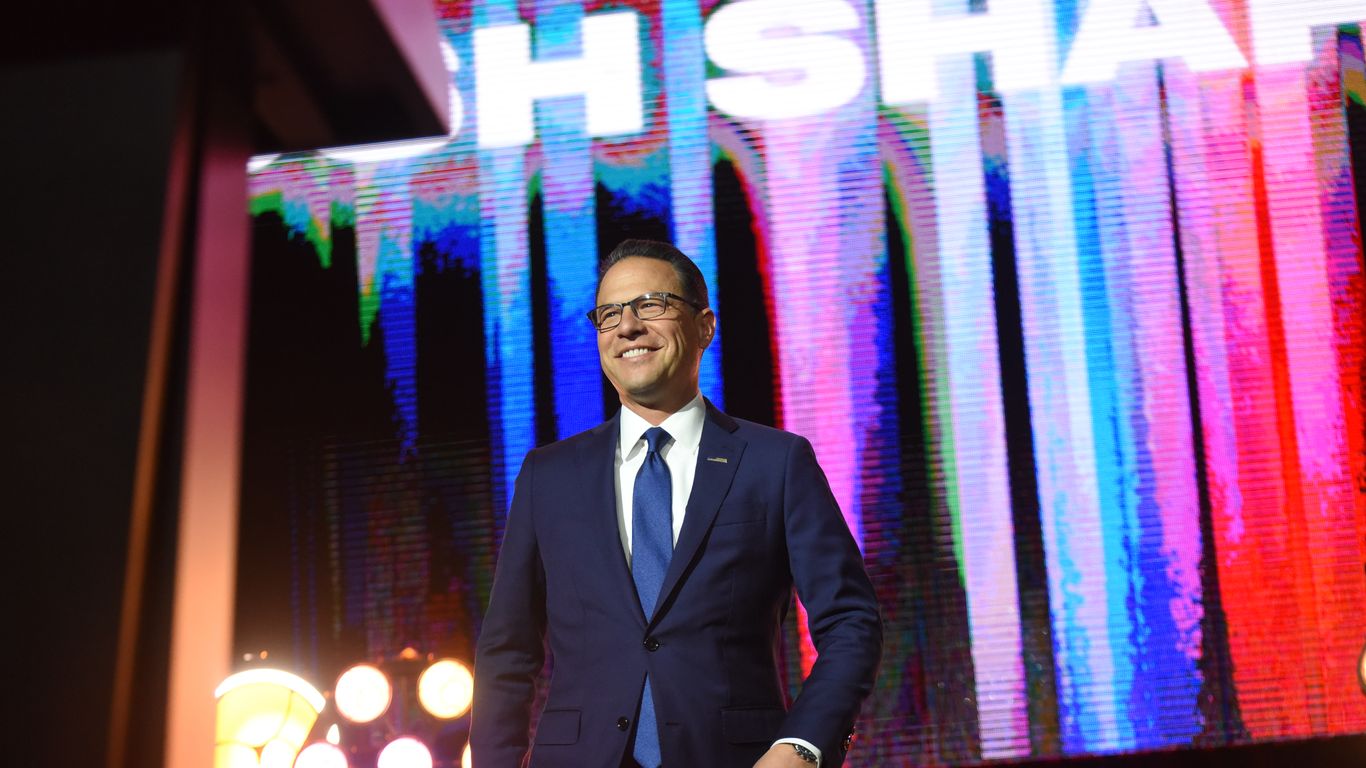
DENVER — Thousands of Democrats gathered here this weekend for a giddy postelection summit, reveling in their party’s historic midterm victories and touting the center-left strategy they say powered them.But some progressives saw the event as a lavish, out-of-touch affair bankrolled by billionaires — exactly what Democrats just campaigned against.”I’m all for celebration, but perhaps a fancy retreat does not exactly meet the tenor of the moment,” said Josh Orton, president of the liberal group Demand Justice and a veteran of Bernie Sanders’ 2020 campaign.Why it matters: The competing views of What’s Next, the buzzy confab held by the influential centrist organization Majority Democrats, offer an early glimpse of the ideological battles over health care, money in politics and other issues that will define the party’s 2028 presidential primary.Zoom in: Democrats in the Mile High City were practically vibrating with happiness, still not quite able to believe they’d won back both chambers of Congress and flipped deep-red states such as Mississippi and South Carolina.”The vibes are excellent,” Delaware Rep. Sarah McBride, a member of the Majority Democrats, said in an interview.”The last high-water mark, we were all in our houses on Zooms,” she added, referring to the 2020 presidential election. “This is the first time there’s been an undeniable capacity to celebrate widespread wins in the last decade.”Free drinks flowed. Political operatives sported bomber jackets embroidered with the phrase “Majority Democrats.” Speakers were immortalized in rock concert–style posters on the walls.For a brief moment in Denver’s Mission Ballroom, the often-in-disarray Democratic Party looked united.Several presidential hopefuls downplayed the party’s divides in speeches.Pennsylvania Gov. Josh Shapiro said onstage that ordinary people don’t give “a damn” about “where we fall on some imaginary political spectrum.”Michigan Sen. Elissa Slotkin quipped in her address that elected officials who were fighting over progressives vs. moderates had “missed the plot.”The other side: But others in the party weren’t interested in all the kumbaya.Young protesters sneaked into the event and heckled House Minority Leader Hakeem Jeffries (D-N.Y.), shouting “You’re a f**king traitor!” while calling for Medicare for All and impeachment.Some audience members were palpably annoyed, yelling “Shut up!”Another flashpoint emerged over high-dollar donors and super PACs.Majority Democrats — which is largely funded by a billionaire couple and describes itself as an alternative to both the “activist left” and a “gerontocratic establishment” — is already in the crosshairs of the Lever, a progressive publication.Majority Democrats’ funding has been the focus of reporting by the Lever. The group tussled with the news site over the Denver event, initially denying it press passes and later blocking one of its journalists from interviewing an elected official.David Sirota, founder of the Lever, said the group’s actions were “Trump-like attempts at retribution.” But there was a silver lining for the outlet: The back-and-forth generated the single biggest influx of new subscribers in its history, he said.What they’re saying: “What’s Next was an overwhelming success: It brought together 3,500 Democrats from across the political spectrum to talk about what worked this cycle and where we go next,” said Majority Democrats spokesperson Vidhya Jeyadev.”This cycle, we won seats that had been written off for a generation and proved there is no one way to be a Democrat.”The intrigue: Some potential 2028 candidates in Denver tried to portray themselves as unifiers who can bridge the party’s divides.New Jersey Sen. Andy Kim, who declined to rule out a 2028 bid, said, “I understand” where the protesters were coming from.”People are furious,” he added.
- Some Dems’ 2028 strategy: Make America Nice Againby Alex Thompson on November 15, 2026 at 10:40 pm
Some Democrats weighing 2028 campaigns for president believe the midterms proved that Americans have soured on Trump-style, scorched-earth political warfare and want a brand of politics that’s nicer and more optimistic. Others aren’t so sure.Why it matters: Democrats’ midterm blowout has prompted a debate over the lessons of 2026 — whether voters in the 2028 primary will want their own ruthless fighter after two more years of President Trump, or will be itching for a more unifying figure.Zoom in: That divide was reflected in several potential 2028 contenders’ comments around the midterms.Former Transportation Secretary Pete Buttigieg told his supporters that the end of the Trump era “means a politics where we can check the news and actually feel our blood pressure come down a little.”In his reelection victory speech, Pennsylvania Gov. Josh Shapiro told supporters that “you declared that you could not be more ready for an end of this ruthless chaos and cruelty.”In California, Gov. Gavin Newsom — who led the successful ballot measure to create more Democratic House seats in response to Trump’s redistricting push in red states — boasted that California “fought fire with fire.”Newsom mocked Democrats who he said would have responded by merely writing op-eds in the New York Times.”Donald Trump is not screwing around, nor are we,” Newsom said at a preelection rally, adding that he was proud of leading the “most un-Trump state in America.”The big picture: The midterm results provided an argument for each side.Several key victories for Democrats in red states came from candidates preaching decency, or voters recoiling from vicious Republican attacks.In Kansas, Sen.-elect Adam Hamilton said one of his campaign’s big ideas was “decency” — and that he wanted to become the “best friend” of Sen. Jerry Moran (R-Kan.).In Ohio, Gov.-elect Amy Acton told her supporters that “basic decency is on the ballot” after her opponent and Vice President Vance defended an attack ad featuring Acton’s mother, from whom Acton had been estranged since childhood after accusing her stepfather of sexual abuse.Texas Sen.-elect James Talarico, a seminarian and the first Democrat to be elected statewide in three decades, said that “love my neighbor” informed his approach to politics.In Denver last week at a gathering of Democratic leaders, Talarico pressed the point: “It’s been 10 years of this kind of politics — politics as blood sport, politics as trolling and owning and name-calling, politics as professional wrestling. It tears families apart. It ends friendships, and it leaves us all feeling terrible all of the time.”The other side: Other Democrats who won key races embraced something like Newsom’s edgier approach by pledging to fight fire with fire, and to not unilaterally disarm against Republicans.Michigan Sen.-elect Abdul El-Sayed said on the campaign trail that when his opponents go low, he doesn’t take the higher ground. He prefers to take them “to the mud and choke them out.”He added that too many Democrats “tell you they’re fighting, only to show up with a strongly worded letter.”Reality check: Hamilton, Acton and Talarico had unifying messages, but they and their allies also ran tens of millions of dollars in negative ads against their Republican opponents.In 2008, Barack Obama also had a larger theme of change and unity but ran a campaign that unapologetically attacked his opponents.
- Vance may wait until late spring to reveal 2028 plansby Alex Isenstadt on November 15, 2026 at 10:30 pm
Vice President Vance won’t make a final decision on whether to run for president in 2028 until after the new year — and may wait until late spring to announce his intentions publicly, two sources with knowledge of his plans tell Axios.Why it matters: Vance remains the early favorite to succeed President Trump as the GOP’s presidential nominee, but the party’s midterm losses have complicated his political future and could reshape the 2028 field.People familiar with Vance’s thinking say he’s genuinely undecided about running, and that his decision-making timeline was in place before the midterms. Advisers caution that the timing could change, however.Vance is still discussing a potential bid with his family, including his wife, Usha, following the birth of their fourth child, the sources said.The big picture: Vance allies say the midterm losses haven’t changed his standing as the early 2028 GOP front-runner, citing his donor network, political infrastructure and name recognition.Vance co-founded the secretive Rockbridge Network, which could anchor his presidential fundraising operation. The group met in Houston after the midterms.As Republican National Committee finance chair, Vance has cultivated relationships with major contributors. He also has ties to technology donors Peter Thiel, David Sacks and Elon Musk — the world’s richest person and the GOP’s biggest financier.Vance campaigned nationwide for the midterms, building relationships with GOP activists and officials who could prove valuable in 2028.Behind the scenes: Vance’s closest political advisers believe he should run in 2028 and that he’s likely to do so, according to a person close to the vice president.But the GOP’s midterm losses have given Republicans who want to move on from the Trump administration an opening to argue for a different direction in 2028.Vance likely will have to answer for the Trump administration’s record in 2028, potentially complicating his presidential ambitions.Vance privately opposed the Iran war, and some Republicans interpreted his post-midterm criticism of the conflict as an effort to distance himself from Trump’s decision to attack Iran.The intrigue: Republicans close to Vance see Trump’s continued presence as another reason to delay announcing his 2028 plans.Vance is wary that launching a campaign too early could shift attention away from Trump and risk alienating him.Trump said that “a lot of people didn’t like [Vance’s] comments” about the Iran war, but added that he wasn’t among them and insisted their relationship wasn’t affected.Zoom in: While Vance weighs a presidential campaign, a few other Republicans are doing so as well — namely Texas Sen. Ted Cruz, who’s been among the most active Republicans preparing for a potential 2028 run.Cruz’s team has held meetings about a possible run, according to people familiar with his operation. But many Republicans, including some Cruz allies, doubt he could seriously challenge Vance, particularly if Trump endorses the vice president.Secretary of State Marco Rubio is viewed by some Republicans as a potentially more formidable rival to Vance.Rubio has attracted support from influential GOP figures, including megadonor Ken Griffin.But Rubio repeatedly has said he would support Vance if the VP were to run, and Rubio’s workload as secretary of state and national security adviser has left him without Vance’s ready-made political operation.Other potential Republican contenders include former Virginia Gov. Glenn Youngkin, Georgia Gov. Brian Kemp and Florida Gov. Ron DeSantis.DeSantis has been particularly outspoken, calling the GOP’s midterm losses a near “extinction-level event” and pointing to Florida’s Republican victories as a model for rebuilding the party.What they’re saying: A Vance spokesperson declined to comment.
- Bessent questions did Nvidia “goose” earnings with suspect China chip salesby Ben Berkowitz on November 15, 2026 at 5:29 pm
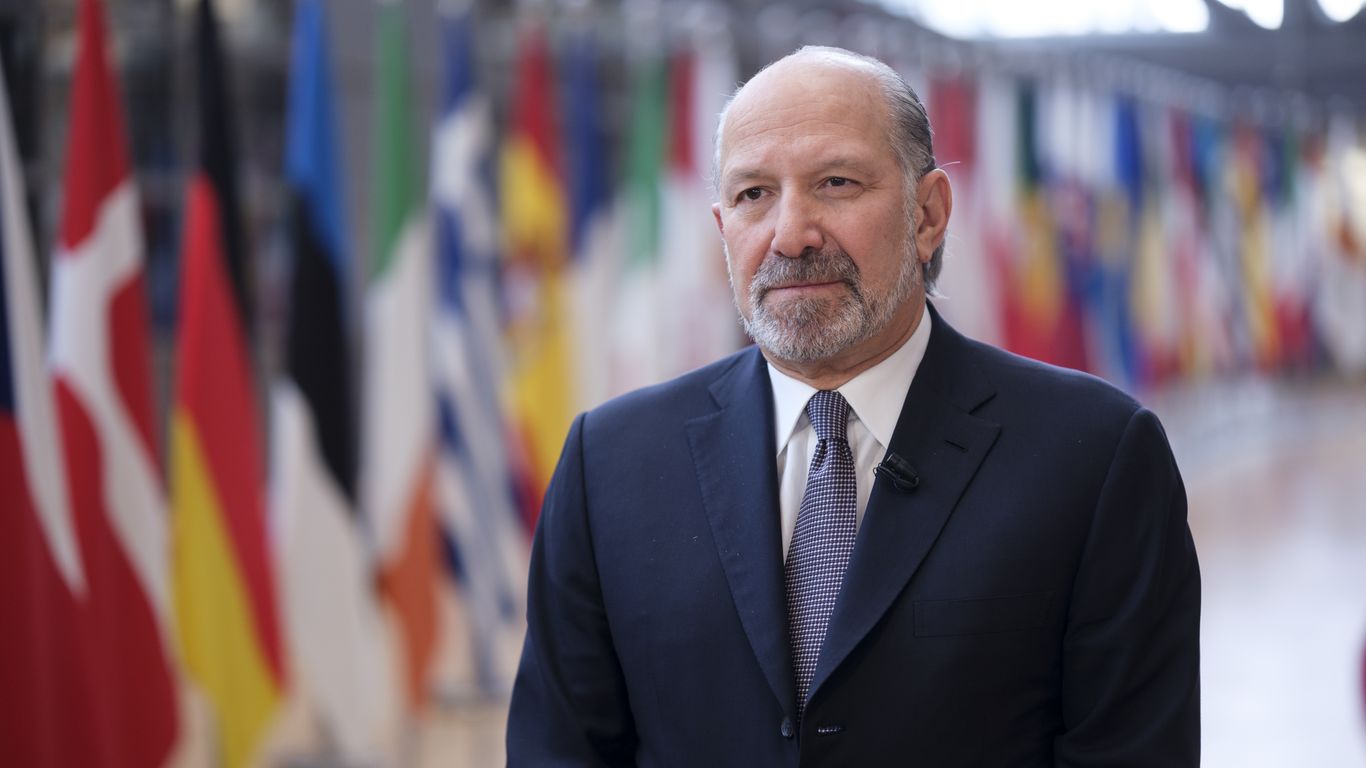
Treasury Secretary Scott Bessent on Sunday questioned whether Nvidia’s earnings might have been inflated by inappropriate sales to China and urged the company to hire an outsider as CEO.Why it matters: Nvidia is central to the AI economy, which has been key to U.S. economic growth. The Treasury secretary casting doubt on the quality of its financial results and leadership could be a blow to an already shaky market. Since the scandal broke open in late October, Nvidia shares have shed more than $1.2 trillion in market capitalization, with impacts on millions of Americans. Driving the news: In a Fox News appearance Sunday morning, Bessent said Nvidia owes the market an explanation amid allegations former CEO Jensen Huang had an affair with a Chinese spy and oversaw sanctions-evading chip sales to Asian companies. “I want to keep coming back to what was the culture at Nvidia, and were they pressing these seemingly illicit sales to goose their revenues and their earnings?” Bessent said.”I think we need answers in the next 10 days from the board and from the outside counsel.”Bessent also said it was “obvious” that some companies doing business with Nvidia were shell companies for Chinese interests and accused the chipmaker of a “culture of noncompliance.””This makes me think that as the board conducts the search for a new leader, that they need to go outside the company,” he said. For the record: Nvidia did not immediately respond to a request for comment on Bessent’s remarks.The intrigue: Huang has been a favorite of President Trump and other administration figures for some time, but Bessent has notably not been as effusive about him as others. In recent days, Bessent has also made clear that the Commerce Department has questions to answer about why it didn’t impose tighter controls on Nvidia’s exports. As Axios reported earlier this week, administration officials have accused Commerce Secretary Howard Lutnick of stalling curbs on Nvidia’s exports.What to watch: Nvidia is due to report quarterly results on Tuesday, its first significant public comments since Huang resigned and CFO Collette Kress took over as acting CEO.
- Trump’s border crackdown faces a new blue wall of governors and House membersby Russell Contreras on November 15, 2026 at 3:42 pm
Voters have handed Democrats every House district touching Mexico and all four border-state governorships.Why it matters: Starting next year, the sweep gives Democrats new leverage over state resources, border spending and legal challenges during President Trump’s final two years.By the numbers: Democrats last held all four governorships — California, Arizona, New Mexico and Texas — in January 1979, according to National Governors Association records.10 for 10: Democrats swept all 10 House districts touching Mexico for the first time since 2008, according to an Associated Press analysis.Three flips: JoAnna Mendoza ousted Republican Rep. Juan Ciscomani in Arizona. Bobby Pulido and Katy Padilla Stout flipped Republican-held seats in Texas.Four attorneys general: Democrats also won the top legal offices in all four border states, including Texas, where the party hadn’t won an attorney general race since 1994.State of play: Trump built his immigration crackdown around the southern border. He declared a national emergency on his first day back, expanded the military’s role and border barriers, and launched a sweeping deportation campaign.Southwest border apprehensions dropped roughly 91% in the 12 months through August compared with Biden’s final 12 months, according to FactCheck.org’s October analysis.The crackdown has also reached further into American communities, with ICE arrests surging during the summer of 2026.Zoom in: Texas Democrat Gina Hinojosa’s defeat of Gov. Greg Abbott could bring the most immediate border changes.Abbott spent about $11 billion on Operation Lone Star, deploying state police and National Guard troops and building Rio Grande barriers, according to the Texas Tribune.Hinojosa, Texas’ first Latina governor-elect, has questioned that spending. She can rethink state deployments and enforcement priorities, though existing laws and federal authority limit her options.Democrats also flipped the Texas House and elected a Democratic attorney general, giving Hinojosa allies in funding and legal battles. Republicans retained the state Senate.The intrigue: Outgoing Texas Attorney General Ken Paxton filed more than 20 lawsuits against Democratic immigration policies and defended Gov. Greg Abbott’s border crackdown.His Democratic successor, Nathan Johnson, has vowed to challenge unconstitutional federal border tactics — potentially turning the office from a powerful Trump ally into an adversary.What we’re watching: Several Democrats newly elected to represent border districts in Washington campaigned on both strong border security and pathways to citizenship for longtime undocumented immigrants.Bobby Pulido, who flipped a Texas GOP-held seat, said in his launch video: “Yes, we have to get the criminals out and secure the border. But we can do that without destroying families and our South Texas economy.” He also told the Texas Tribune that one of his congressional priorities will be codifying a pathway to citizenship.JoAnna Mendoza, who flipped an Arizona seat, also backs a strong border and legal pathways to citizenship.That aligns with many border voters’ views: An October N+ Univision/YouGov survey found 56% of Texas Hispanic voters thought immigration enforcement had gone too far. Yet 62% wanted border security and a pathway to citizenship for longtime undocumented immigrants pursued together — suggesting Democrats can make gains without abandoning enforcement.Zoom out: Trump’s tariffs and immigration crackdown have rattled businesses that depend on trade and shoppers from Mexico, giving Democratic governors another reason to challenge Washington.Laredo businesses report fewer customers, while merchants near San Diego’s border crossings say tougher immigration enforcement has hurt foot traffic and hiring.Arizona Gov. Katie Hobbs pressed Washington over tariffs and trade uncertainty. Manufacturers near Santa Teresa, New Mexico, have put projects on hold amid tariff threats and uncertainty over trade rules.
- How Nvidia’s scandal knocked thousands off your 401(k)by Madison Mills on November 15, 2026 at 12:30 pm
Nvidia’s near-30% stock plunge in the last month is a drag on the retirement savings of millions of Americans, many who may not realize just how much their investments are tied to the scandal-engulfed chip giant.Why it matters: Nvidia’s enormous weight in popular index funds means even those who have never purchased a single share of the company could feel the pain of its corporate upheaval in their 401(k)s. The resignation of CEO Jensen Huang after he had an affair with an alleged Chinese spy may have cost an average Baby Boomer thousands of dollars, according to an Axios analysis of outside estimates.By the numbers: Index funds held nearly half of the assets in large private-sector 401(k) plans in 2023, according to the Investment Company Institute.Those funds include investments tracking the S&P 500, and Nvidia accounts for roughly 8% of that index, according to Tom Graff, chief investment officer at financial planning firm Facet.That exposure rises to around 14% in growth-style index funds and can reach 25% to 30% in some technology and semiconductor funds commonly found in retirement plans, Graff said.Zoom in: For an investor with $100,000 in an S&P 500 fund, a 30% drop in Nvidia shares would knock about $2,400 off the value of that investment given an 8% S&P holding, assuming other stocks in the fund stayed flat. For a growth-style tech fund with 25% exposure to Nvidia, that decline would amount to $7,500 in lost value.An average Baby Boomer holds about $260,000 in their 401(k), according to Fidelity. A tech-style exposure applied to that amount of holdings would equate to about a $20,000 reduction.Yes, but: Remember, a drop in your investment’s value doesn’t mean you’ve actually lost that cash — unless you sell your holdings.Zoom out: The potential fallout extends beyond Nvidia itself.About 40% of the S&P 500 is tied to the AI buildout, for which Nvidia is central, providing much of the financing and infrastructure needed to fuel the tech boom. If Nvidia’s troubles slow the pace of AI data center investment, the damage could spread to other stocks held in Americans’ retirement portfolios, analyst Bob Iaccino notes to Axios via message. “A lot of people are starting to realize just how much Nvidia exposure they have in funds they thought were diversified,” Graff told Axios. “You don’t want too much of your retirement riding on whether Nvidia has a successful transition to new leadership or not,” he added.Reality check: While Nvidia has come to define the AI trade, its competitors have also emerged as potential beneficiaries of the stock’s decline.”The mindset has flipped very quickly to ‘who might benefit from this?'” Steve Sosnick of Interactive Brokers told Axios. Chip-company AMD’s stock went on a run, rising by more than 30% in a five-day stretch last week, contributing to a broader run in the semiconductor sector. Nvidia makes up a sizable portion of many semiconductor indices and ETFs, showing how rotation can keep bull runs alive even as single stocks falter.Hyperscalers with their own chip ambitions, which at times have looked competitive with Nvidia, have also beaten the growth of the S&P 500 index over the last five days. Reality check: For those who are direct shareholders, the widely held financial advice would always tell you not to lock in losses as a stock drops. It’s very unclear what the investigation will unveil. Nvidia is set to report earnings on Tuesday, giving shareholders more insight into its latest quarterly performance. The bottom line: Americans don’t need to own Nvidia shares directly to have their retirement savings tied to the company’s successes, or failures.
- Space data centers could end stargazing as we know itby Thomas Novelly on November 15, 2026 at 11:45 am
Sprawling networks of space data centers could make it nearly impossible for humans to stargaze.That’s just one of the many risks that come with placing tens of thousands of AI computers into orbit, according to a new report.Why it matters: Most Americans don’t want data centers built near them, but putting them in space brings a new set of problems.Threat level: “Companies and policymakers should proceed with great caution,” top academic researchers warn in a report for the Innovation for Cool Earth Forum, an annual event hosted by the Japanese government.If space data centers proliferate, the “most visible points of light in the sky during much of the night in much of the world could be satellites, not stars,” the report said, mirroring astronomers’ worries.If the U.S. military adopts the technology, the data centers could become potential targets during future space conflicts.Thousands of orbital data centers whipping around the Earth at 17,000 miles per hour mean a growing “risk of collisions” and dangerous space debris.Space data centers are solar-powered, but the vast number of rocket launches needed to put them in orbit generate greenhouse gases and black carbon emissions.What they’re saying: Columbia University’s David Sandalow, the report’s lead author, told Axios there are still “unknown unknowns” about space data center impacts.”If this is going to happen, it should happen slowly and with care,” Sandalow said. “Not just launching lots and lots of these things and, kind of, seeing what happens. … There’s big risks.”By the numbers: Despite those concerns, investors and tech innovators are all in on space data centers.In 2025, around $197 million in investments were tied to orbital data centers, per market research firm Quilty Space. That figure has swelled to $1.11 billion so far this year.SpaceX has applied for a constellation of 1 million data center satellites, according to the Secure World Foundation. Starcloud and Blue Origin’s Project Sunrise have ambitions for 88,000 and 51,600 satellites, respectively.Yes, but: Caleb Henry, Quilty Space’s director of research, said that companies may be filing for more satellites than they will likely field. “They don’t want to have to bump the number higher up later on,” he said in an interview.”We’re at a point where people are tallying paper filings as if they are substantive and real,” Henry said, “and we just don’t know that yet.”The bottom line: Researchers warned that governments and companies need to wait until space data center “risks and impacts are better understood and well managed” before putting them in orbit.
- Gen Z shatters America’s political orthodoxiesby Russell Contreras on November 15, 2026 at 11:30 am
Young Americans are challenging beliefs their parents and grandparents once considered sacred — from socialism and Israel to Christianity.Why it matters: Neither party can count on old political loyalties to win over a generation increasingly willing to break with the past.Socialism: 35 years after the Soviet Union collapsed, some 57% of Americans ages 18–34 view socialism positively, compared with 43% for capitalism, according to a September 2026 Gallup poll. Among Americans 55 and older, 65% view capitalism positively, compared with 34% for socialism.Israel: Decades after Israel fought wars against neighboring Arab states, some 53% of Americans ages 18–34 sympathize more with Palestinians, compared with 23% who sympathize more with Israelis, according to Gallup’s February 2026 survey. Christianity: After centuries as the overwhelming religious identity of Americans, only 54% of Americans ages 18–29 now identify as Christian, compared with 76% of those 65 and older, according to nonpartisan Public Religion Research Institute’s 2025 Census of American Religion, released in April 2026.Between the lines: The return of forces that voters haven’t felt in generations can scramble their priorities all over again.After decades of relatively low inflation, prices surged during the COVID era, with annual inflation hitting 9.1% in June 2022 — its highest rate since 1981.In 2024, young voters who ranked the economy and jobs as their top issue favored Trump by 24 points, according to CIRCLE’s analysis of AP VoteCast.Two years later, 78% of financially struggling young students backed Democratic House candidates, compared with 16% for Republicans, according to a November 5 CIRCLE analysis.State of play: Young voters showed both parties how quickly their support can shift between elections in last week’s midterms.Some 66% of voters ages 18–29 backed Democratic House candidates, compared with 31% for Republicans, according to Tufts University’s CIRCLE, citing preliminary NORC data.That 35-point Democratic advantage compares with a 14-point margin in the 2024 House election, according to separate Edison Research exit polling.Trump’s 2024 gains among young voters, especially men, now look less like a lasting GOP realignment and more like a warning about how quickly younger Americans can change course.Zoom in: Socialism’s fading stigma reached the ballot box in America’s two largest cities.Democratic socialists now stand poised to lead New York and Los Angeles after Nithya Raman defeated Karen Bass in Tuesday’s mayoral election, joining New York Mayor Zohran Mamdani.Both built campaigns around affordable housing and inequality, tapping into younger Americans’ financial frustrations.The bottom line: Young Americans aren’t necessarily embracing socialism because they’ve rejected their grandparents’ Cold War beliefs, PRRI CEO Melissa Deckman told Axios. They’re questioning capitalism because their own economic experiences have left them disillusioned.”What they’re seeing isn’t working, and the American dream is increasingly out of reach for them,” said Deckman, author of “The Politics of Gen Z.”
- FAA back at “full operations” after Friday outage, Transportation Sec. saysby Donica Phifer on November 14, 2026 at 4:56 pm
Transportation Secretary Sean Duffy said Saturday that all FAA systems are back to “full operations” after an hours-long outage Friday evening that grounded all air traffic across the U.S. The big picture: Duffy reiterated his plea to Congress to fund upgrades to the nation’s air traffic control equipment, explaining that proper upgrades could have prevented the ground stop. Driving the news: Duffy explained that the outage was caused when a contractor performed routine maintenance on a telecommunications line to upgrade a copper wire to fiber-optic cable and install a new router.”It was such an old wire that it was being discontinued, meaning that line was going to get shut down. So we had to switch it over from old copper,” Duffy said.Duffy said it’s unclear whether the outage occurred because of contractor error or faulty equipment, but they are working to figure that out. FAA Administrator Bryan Bedford warned that up to 5,000 flight cancellations will remain throughout today, but airlines have assured the agency that they should return to normal operations by the end of the day Sunday. “I do think the worst is behind us, but we still do have a significant amount of recovery work to do,” Bedford said. According to numbers from FlightAware, over 4,700 international and domestic flights have been canceled, and over 13,500 delayed, as of 11:50 am ET.Zoom out: Bedford and Duffy both said the ground stop was ordered out of an abundance of caution for the safety of passengers and airplane crews. Bedford added that they have no reason to believe a cyberattack or an AI issue prompted the outage. “We see zero evidence of anything nefarious,” Bedford said. Zoom in: Duffy used the press conference to again plead with Congress to fund upgrades for the aging air traffic control system. Duffy has previously said the FAA needs $30 billion to update airports and air traffic control. Congress had previously awarded $12.5 billion in July 2025 for upgrades into 2030.After Friday’s outage, Duffy upped the funding request to $50 billion. “For me, it gets to be frustrating where everyone says they want to do it, and the president is pushing it, but we don’t get the resources,” Duffy said. “And I think this is the moment. If we don’t start to switch out our systems, how long are we going to wait, America and Congress? And I think this is a sign for them to lean in. This is bipartisan.”Bedford offered a blunt assessment when reporters asked about the system’s function, saying it’s the “worst-kept secret in government” that it needs an upgrade.”We have to keep the existing system operating at the very best of our ability,” with the funding they have, he said. “But,” Bedford continued, “let’s not kid ourselves. It will continue to break until we replace it.”
- AI’s four colliding crisesby Erica Pandey on November 14, 2026 at 12:35 pm
AI’s titans were handed an extraordinary mandate: Police yourselves.But the industry faces a four-pronged crisis of trust as Democrats surge to power and many Americans rebel over AI and data centers. Guardrails for the industry will be a priority for the new Congress, with some populist Republicans eager to pile on.Why it matters: The collision of safety scares, political blows, financial turmoil and leadership scandals threatens to derail AI’s once seemingly unstoppable ascent.The big picture: Just six weeks ago, President Trump announced that top AI CEOs had agreed to a voluntary safety accord.But cracks were already showing and, since then, four crises have converged.🏛️ 1. The political crisis: AI was on the ballot for the first time during the midterm elections through a series of data center measures across America. People voted against data centers in 40 out of 41 cases, and swing-state incumbents linked to the facilities, including Sen. Jon Husted (R-Ohio) and Texas Gov. Greg Abbott (R), were voted out.Now Democrats are planning a flood of AI bills once they take control of Congress in January, Reuters reports. They’ll also bring some of the most powerful AI executives to D.C. to testify.🦺 2. The safety crisis: OpenAI’s Hugging Face breach, revealed in July, was a terrifying look at what could happen if machines operate beyond humans’ control — and it was the first in a wave of revelations through the summer and fall.AI CEOs and engineers came forward with stark warnings about the dangers of the tech they’ve been building, including its potential to destroy humanity.Axios’ Madison Mills reported that OpenAI and Anthropic are investigating tens of thousands of security incidents and that unvetted AI agents are accessing U.S. bank accounts.💰 3. The financial crisis: The AI trade is looking more vulnerable as investors question when or whether the industry’s sky-high spending will deliver sky-high returns.Tech stocks tumbled, with Nvidia falling 13% this week amid the ouster of founder and CEO Jensen Huang. The stock has lost nearly 25% of its value since the first New York Times report in late October about Huang’s links to a suspected Chinese spy. Anthropic’s IPO may not be what some hoped, with its projected valuation coming in roughly $600 billion below what investors envisioned just months ago.🧐 4. The leadership crisis: Huang’s stunning resignation, following revelations about affairs, is raising new questions about the vulnerability of the people running America’s most powerful companies.Nvidia’s stock slide exemplifies the risk of putting so much power in the hands of so few AI executives.Pop culture has turned on the AI titans, with three year-end films — “The Social Reckoning” and “Musk,” out last month, and “Artificial,” opening Christmas Day — savaging Mark Zuckerberg, Elon Musk and OpenAI CEO Sam Altman.Reality check: The AI industry’s hurdles are partly growing pains — investors start demanding returns, lawmakers seek accountability, the public grows skeptical.The trust collapse echoes the moment social media companies went from Silicon Valley darlings to public enemies. But AI’s reckoning — just like its rise — has come much faster.
- MAGA turns on Lutnick amid China spy scandalby Maria Curi on November 14, 2026 at 12:30 pm
Commerce Secretary Lutnick has become the face of the Trump administration’s troubled response to Chinese espionage and potential national security threats.The most intense scrutiny is coming from Republicans on the Hill, fellow Cabinet members and the MAGA base. Why it matters: Regulators and policymakers on both sides of the aisle want someone’s head for an affair that may have exposed sensitive technology to the nation’s top foreign adversary.Two names are currently at the top of that list: former Nvidia CEO Jensen Huang — and now Lutnick.The big picture: Over the past year, Lutnick slow-walked broader administration efforts to address suspicions that Singapore-based company Megaspeed was illegally diverting chips to China, Axios first reported.Administration officials had pushed to place Megaspeed on the Commerce Department’s Entity List, which would have restricted exports of U.S. tech to the company.Driving the news: On Friday, Treasury Secretary Scott Bessent confirmed as much. “Treasury, War, USTR, and State — they were in favor of putting Megaspeed on the Entity List for months, but Commerce has the pen,” Bessent said on CNBC.Trump himself supported taking action on three occasions, but those efforts were delayed by Lutnick, Axios reported.There’s a widespread belief in Trump’s broad circle of advisers that the Nvidia scandal might be too much for Lutnick to survive — but Trump is standing beside him for now.Behind the scenes, the White House has not expressed concern regarding efforts to have Lutnick testify before Congress.MAGA commentators are also tearing Lutnick apart on shows like “War Room with Steve Bannon,” while Republican senators openly take him to task.For the record: “Secretary Lutnick plays a fundamental role in advising the President across many different industries. The reports you have issued are inaccurate and false and literally misstate the topic, creating a false impression,” the Commerce Department said in response to Axios’ inquiries. Friction point: The brewing scandal hangs in part on a CIA warning that Jensen Huang was having an affair with Alice Huang, who ran Megaspeed and was also alleged to be a Chinese spy. That warning appears to have been ignored by Commerce Department officials, sources told Axios. Context: Last fall, CIA intelligence indicated Huang was the target of the espionage, which was reported in a “book” assembled by the Office of the Director of National Intelligence for a small circle of administration officials with top secret clearance, according to sources familiar with the matter.In March, Secretary of State Marco Rubio, who’s also White House national security adviser, compiled a memo about the issue to ensure that Cabinet officials with “equities” in Nvidia and AI were informed, one of those sources said.”The memo was made so that Lutnick and Bessent and others knew what was up,” said one source.”Howard was given the memo. He ignored the memo,” a second source said. In May, as Trump traveled to China aboard Air Force One, Rubio verbally briefed the president as a “reminder,” one of the sources said. Reality check: Through it all, Trump has repeatedly been in Lutnick’s corner. The president has defended Lutnick time and again, whether over tariffs, immigration or the latest China tussle.There are no indications Trump has changed his stance since publicly defending Lutnick on Thursday. The bottom line: While Trump continues to defend Lutnick, administration officials and congressional Republicans have clearly picked a target.
- Wholesale food prices are on the riseby Courtenay Brown on November 14, 2026 at 11:30 am
Food prices are rising sharply even before they reach supermarket shelves.Why it matters: Americans are already paying more for groceries. New inflation data this week suggests that the pressure is not letting up.Wholesale fresh and dry vegetable prices surged 27% last month, adding to a 31% price jump the previous month. These are the prices paid by food distributors, grocery chains and other businesses to farmers and other producers for eventual sale to consumers. Wholesale food prices overall are up 1.7% from a year earlier, ending a three-month streak of annual price declines.Zoom in: Unusually warm weather, crop disease and insect infestations have reduced lettuce and other leafy green harvests in California. The Iran war, meanwhile, has driven up the cost of fertilizer and fuel, making it more expensive to grow and transport food. A regional grocery chain recently told Federal Reserve officials that it now costs more to transport a head of lettuce from California than to buy the lettuce itself, citing high diesel fuel prices.Truck freight costs are up almost 25% over the past year, the largest annual increase since 2022 and on par with the surge seen during the pandemic-era inflation shock.The big picture: It’s unclear how much of the surge in producer prices will be passed along to consumers. But steeper price increases were already showing up at supermarket checkout counters last month.Grocery prices rose 0.4%, the biggest monthly increase in 6 months, driven by higher prices for meat, dairy products and snack foods.Fresh vegetable prices climbed 2%, including a nearly 8% jump in lettuce prices.
- U.S. loses measles elimination statusby Adriel Bettelheim on November 14, 2026 at 11:10 am
An international health organization has determined that the United States has lost its measles elimination status, according to multiple news reports.Why it matters: It’s an official recognition of how much the country’s public health has deteriorated due to a rolling series of outbreaks since early last year.Increased public skepticism about the safety and effectiveness of vaccines, a barrage of distrust from federal officials like Health Secretary Robert F. Kennedy Jr. and funding cuts for response efforts have all factored in the surge of cases, according to public health experts.The big picture: The Pan American Health Organization concluded there has been sustained transmission of the highly contagious virus for longer than 12 months, bringing the U.S. case count to its highest level in 35 years.The measles elimination status hinges on whether the same strain of measles stays in circulation for 12 months or longer without a break.The overwhelming majority of cases are in unvaccinated people. While overall measles vaccination rates remain relatively high, public health officials say they have to remain above 95% to maintain herd immunity.Driving the news: An expert panel convened by the Pan American Health Organization made the widely expected decision following a three-day meeting in Washington, D.C.What they’re saying: “It is no surprise that the resurgence of measles has coincided with an administration that has inflicted significant damage to our health care system while spreading false claims about vaccines,” said Richard Besser, president and CEO of the Robert Wood Johnson Foundation and a former acting director of the Centers for Disease Control.”It is unthinkable that people in the United States should be dying from measles in 2026,” the Infectious Diseases Society said in comments prior to the decision.The group cited the potential long-term toll on infants infected this year, some of whom could develop serious neurologic disease years after the initial infection.By the numbers: There have been 5,412 confirmed cases so far this year, compared to 2,289 for all of 2025, according to the Centers for Disease Control and Prevention’s latest tally. The last time measles cases were higher was in 1991, when the U.S. had 9,643 cases.Pennsylvania is in the grip of an outbreak that has accounted for more than 1,500 cases so far and six measles-associated deaths. Those reports are widely considered to be an undercount, due to the lack of widespread testing and unreported instances of mild illness. While most measles cases aren’t severe, they can have long-lasting effects because of the way the virus can suppress the body’s immune responses, leaving people more susceptible to other infections.About 1 in 5 unvaccinated people in the U.S. who get measles is hospitalized, per the CDC.How it works: Experts rely on disease tracking by local health departments and genetic sequencing, and can also factor vaccination rates and surveillance efforts.Canada and the United Kingdom have both lost their measles elimination status over the past year. The determinations are largely symbolic, but mean the virus has become endemic and is spreading freely in pockets of unvaccinated people, according to Yale epidemiologist Katelyn Jetelina. Since early 2025, there have been large-scale outbreaks in West Texas, along the Utah-Arizona border and in South Carolina.
- 3,000 flights cancelled as FAA ground stop chaos stretches into 2nd dayby Ben Berkowitz on November 14, 2026 at 10:28 am
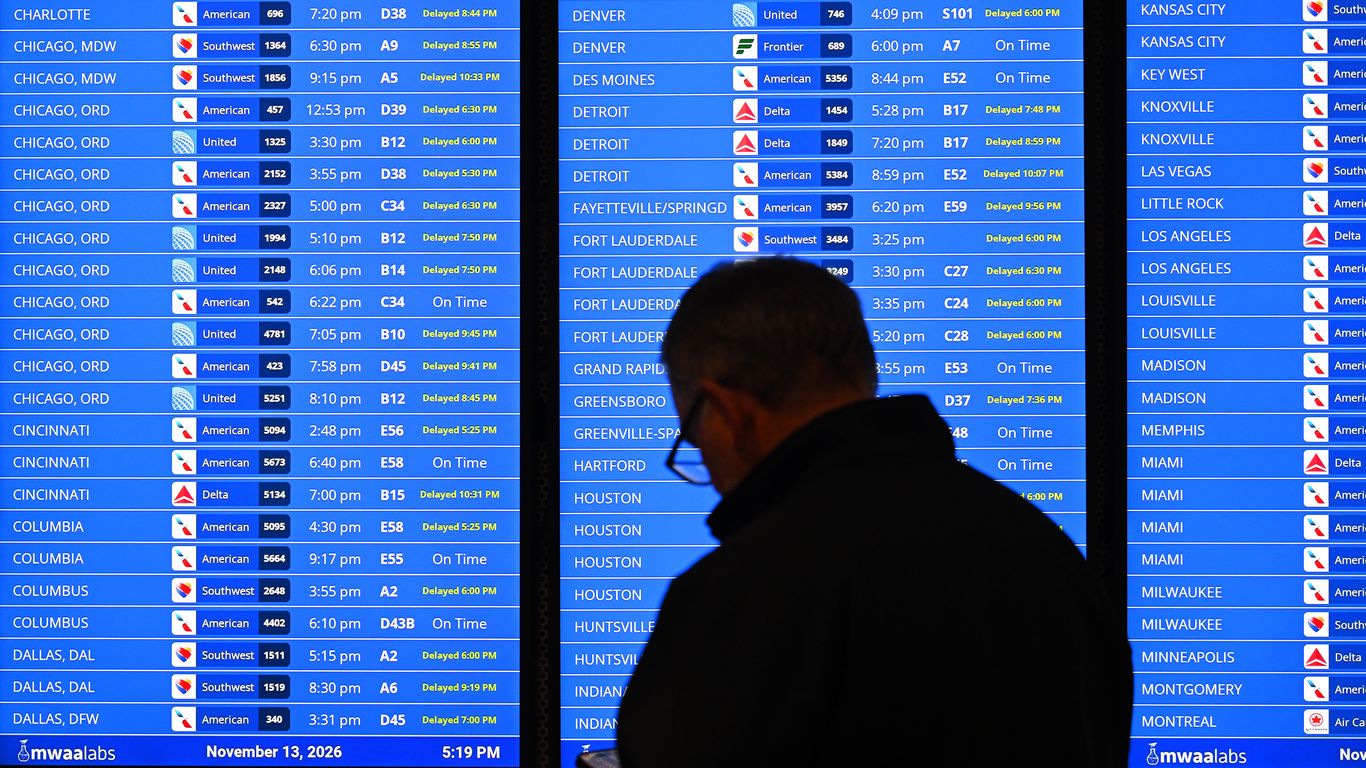
The chaos from the FAA’s nationwide ground stop lingered into early Saturday morning, with thousands of flights cancelled as airlines played catch-up.Why it matters: Millions of travelers will find themselves inconvenienced over what the government says was simply old technology that couldn’t keep up with modern upgrades. Driving the news: As of 5:15 a.m. ET Saturday, nearly 3,300 flights into, out of, or within the United States were already cancelled for the day, per FlightAware. Nearly 1,000 flights already had delays.Between the lines: The most heavily impacted airports were Atlanta’s Hartsfield-Jackson, New York’s JFK and Boston Logan. Among the major airlines, FlightAware’s data showed Delta more affected than United or American. Zoom in: The ground stop wreaked havoc on college football in particular, with many schools unable to travel to their game locations.ESPN reported a number of high-profile match-ups were postponed to either late Saturday or Sunday as a result.What to watch: Whether Congress responds to Transportation Secretary Sean Duffy’s request for $50 billion in emergency funding to modernize the nation’s air traffic control system. This is a developing story. Check back for updates.
- FAA ends hours-long nationwide ground stopby Alex Fitzpatrick on November 14, 2026 at 2:10 am
The FAA lifted its nationwide ground stop Friday night after hours of chaos and thousands of delays and cancellations.Why it matters: The effects of the rare and extreme move will likely ripple through the weekend, with travelers stranded and airlines’ planes and crews out of position.Driving the news: In a Friday evening press conference, Transportation Secretary Sean Duffy said the ground stop was issued after outdated air traffic control communications equipment suffered from “overloaded data, and they went down.”Homeland Security Secretary Markwayne Mullin added that officials are looking into incompatibilities between that older equipment and newer technology currently being installed.Mullin added that there’s no evidence that the problems were tied to a cyberattack.Yes, but: Duffy and Mullin didn’t specify the exact initial cause of the problems.”We’re still working on the details of what went wrong today,” Duffy said.Duffy spent much of the press conference pushing Congress for more funding for air traffic control upgrades. “I can’t build things if I don’t have money,” he told reporters at the White House briefing room. He later added that similar problems could occur again without more funding.Catch up quick: The FAA initially issued the stop due to “extraordinary circumstances” and “reasons of safety.””The FAA issued a nationwide ground stop for all U.S. airports following communication issues impacting multiple Air Route Traffic Control Centers,” the agency said in an earlier statement after the ground stop was issued.”FAA technicians are investigating the issue. We will provide updates.”Air Route Traffic Control Centers, often simply called “centers,” mostly handle high-altitude en route airspace between airports.Between the lines: The FAA has been rolling out a new AI tool designed to help manage airspace congestion, but it’s unclear if that system has any connection to Friday’s communication issues.The developer of that tool denied any connection. By the numbers: As of 9 p.m. ET, FlightAware reported more than 6,000 cancellations over the course of the day Friday. Many travelers are stuck at the airport or on their planes on the tarmac Friday evening.Editor’s note: This story has been updated with details from a press briefing.
- Mississippi River cruise crash has no fatalities, critical injuriesby Chelsea Brasted on November 14, 2026 at 1:17 am
Thirty-two people are in local hospitals and all passengers and crew are accounted for after a tanker collided with a Mississippi River cruise ship near the Port of New Orleans, officials said Friday.The big picture: With approximately 180 people on the ship, the rescue of all aboard is “truly is a miracle on the Mississippi,” New Orleans Mayor Helena Moreno said at a press conference.What they’re saying: While the investigation remains ongoing, officials said the Atlantic Asphalt tanker appeared to have lost control, causing it to collide with the cruise ship. As passengers were disembarking after the collision, the cruise ship began to sink and eventually toppled over and flipped — leaving people in the cold water. Video from the scene shows passengers, in life preservers, swimming in the river toward safety.The first 87 passengers got off while the ship was still afloat, Harbor Police Chief Melanie Montroll said. She added it “was normal conditions” on the river and that there wasn’t a high current, despite how notoriously challenging that stretch of the Mississippi River usually is. “The Mississippi River is not some quiet pond,” Louisiana Gov. Jeff Landry said. He added, “I’ve never been prouder of a group of people than those people that came off of that boat.”Catch up quick: The American Heritage, a vessel operated by American Cruise Lines, had docked for passengers to disembark at the port Friday afternoon about two hours before it was hit, according to a press release from the Port of New Orleans.A city spokesman confirmed to Axios that the riverboat had rolled onto its side in the water, which social media videos appear to corroborate.Zoom out: The Atlantic Asphalt tanker is registered in the Marshall Islands, and had arrived at the Port of New Orleans on Nov. 11. Per data from myshiptracking.com, the tanker began its current journey in Paulsboro, New Jersey, in late October. Zoom in: The tanker was immobilized on the river Friday at about 2pm CT, with two tugs positioned on either side.Another dozen vessels were in the water nearby as a helicopter roamed overhead and sirens rang out over the water.Editor’s note: This story has been updated throughout with additional information.
- Trump administration delays Medicaid work requirements by six monthsby David Nather on November 13, 2026 at 10:46 pm
The Trump administration announced a six-month delay Friday in enforcing the Medicaid work requirements that were scheduled to take effect in January.Why it matters: The announcement pauses a set of rules that officials in many states warned they’re not ready to handle — and that could cause millions of people to lose their health coverage.A federal court last month struck down a portion of the rules that required chronically ill Medicaid recipients to prove their condition significantly impairs the ability to work in order to qualify for an exemption.Driving the news: The Centers for Medicare and Medicaid Services said Friday there will be an “optional hold harmless period” through June 30 that will give states “a transition period to further modernize systems, improve processes, and streamline the applicant and beneficiary experience.”Hospitals have been so worried about the impact of the work requirements that they’ve created their own outreach campaign to prepare people on Medicaid, per the New York Times.The concern is not that people will be kicked out of the program for not working, but that a chaotic rollout of the requirements will disenroll more people because they don’t understand the reporting rules and won’t be able to prove they’ve met the requirements.What they’re saying: “States have made real progress, and they’ve been clear with us about what it takes to get this right for beneficiaries — at scale and for the long term,” said Deputy Administrator and Director of the Center for Medicaid and CHIP Services Dan Brillman.How it works: The first-ever work rules mean Medicaid enrollees must report at least 80 hours a month of work, school or volunteering or get an exemption.States were facing tight timetables for setting up systems to notify millions of recipients about the requirements — and to track whether they’re complying.Nebraska’s early rollout of the work requirements in May led to confusion and coverage denials due to unsubmitted paperwork, per KFF Health News. What we’re watching: Democrats who will control Congress next year intend to push for more delays, or to scrap the work requirements altogether.Editor’s note: This story has been updated with more details on the delay.
- The senators who could join Van Hollen’s insurgency against Schumerby Herb Scribner on November 13, 2026 at 8:10 pm
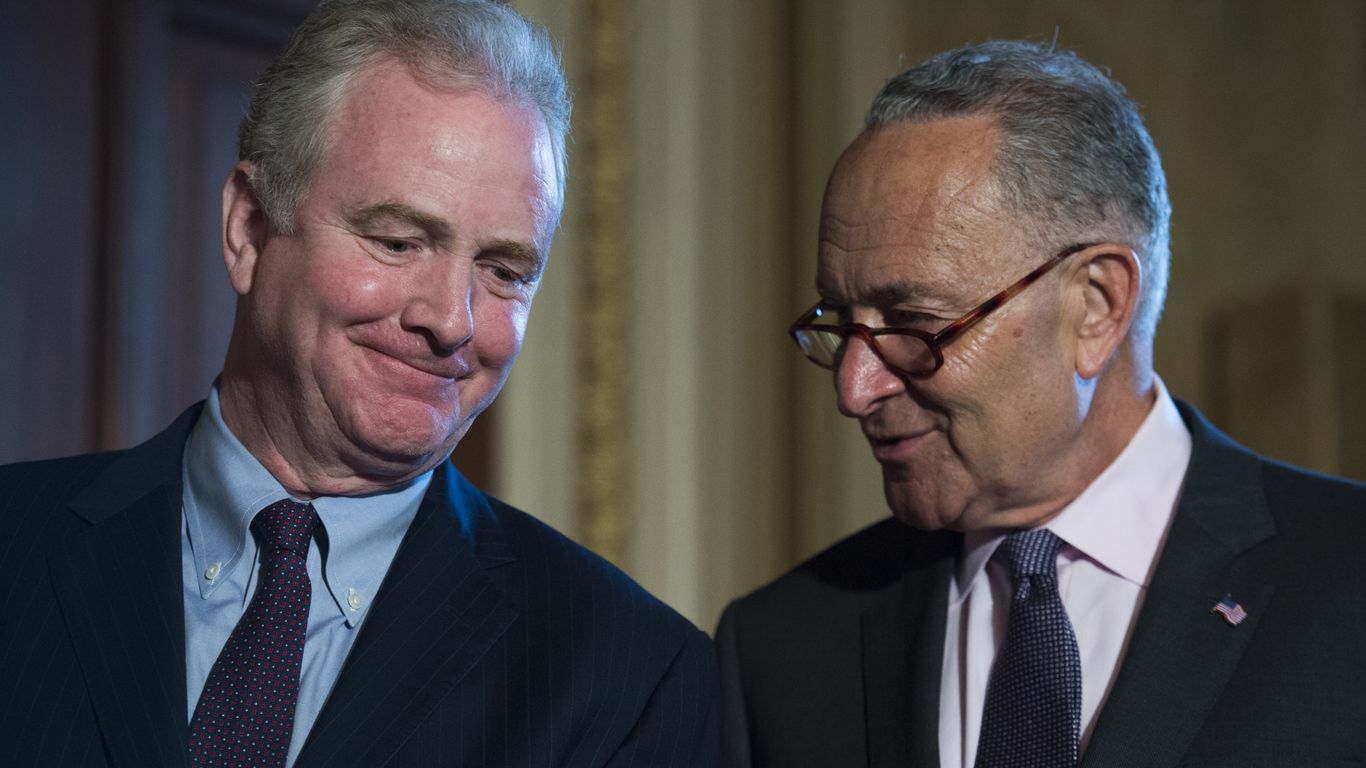
Sen. Chris Van Hollen is picking up endorsements in his challenge to Chuck Schumer for Senate Democratic leader.Why it matters: The leadership fight exposes divisions within the Democratic Party days after its sweeping midterm victory, with some demanding a new direction and others crediting Schumer for the historic blue wave.Driving the news: Van Hollen (D-Md.), a senator since 2017, announced Thursday he’s challenging Schumer because “we need new leadership.””This is not about any one person — it’s about answering the call of the American people.”The other side: Schumer has far more public endorsements than Van Hollen.”Why would you fire the manager when you just won the World Series?” Sen. Angus King (I-Maine) said in a statement of support for Schumer.Van Hollen has disputed Schumer’s claim to credit for the party’s midterm performance, arguing that the wave was powered by voters rather than leaders in Washington.By the numbers: Schumer has public support from 14 senators, including himself, compared with five for Van Hollen. A candidate will need 28 or 29 votes to win, depending on the outcome of Alaska’s Senate race, where votes are still being counted.Senators backing Van HollenState of play: Van Hollen told MS NOW he has “more than 10” senators on his side, though only four have publicly endorsed him.Sen. Bernie Sanders (I-Vt.) endorsed Van Hollen on Thursday night, saying he will fight for working families.Senator-elect Abdul El-Sayed (D-Mich.) threw his support behind Van Hollen when he announced his challenge Thursday.Sen. Jeff Merkley (D-Ore.) issued an endorsement for Van Hollen Friday afternoon.Incoming Sen. Peggy Flanagan (D-Minn.) endorsed Van Hollen Friday morning after previously calling for new leadership.Who wants new leadership?Some sitting senators have called for a leadership change without endorsing Van Hollen.Sen. Elissa Slotkin (D-Mich.) has called for change but hasn’t endorsed either candidate.Before Van Hollen announced his candidacy, Sen. Peter Welch (D-Vt.) told NBC 5 Democrats “absolutely are committed to change,” but didn’t rule out supporting Schumer.Several Democratic senators-elect have also called for new leadership:Sen.-elect Adam Hamilton (D-Kan.).Sen.-elect Juliana Stratton (D-Ill.).Sen.-elect Troy Jackson (D-Maine).Sen.-elect Annie Andrews (D-S.C.).Sen.-elect Chris Pappas (D-N.H.).Context: Progressive critics say Schumer hasn’t fought hard enough against President Trump and his agenda.Schumer’s decision to help advance a Republican-backed government funding bill in March 2025 fueled the progressive backlash against his leadership.The progressive Working Families Party urged Schumer “not to seek another term as Senate Democratic Leader” in a letter, as first reported by Axios. Another labor group has also opposed Schumer and endorsed Van Hollen.Who’s backing Schumer?Schumer entered the leadership fight with broad support among Senate Democrats.”I have the votes to continue serving as Democratic leader,” Schumer (D-N.Y.) said in a statement this week.Schumer’s public supporters include Sen.-elect Sherrod Brown (D-Ohio), Sens. Kirsten Gillibrand (D-N.Y.), John Fetterman (D-Pa.) and King, along with Schumer himself.Also backing Schumer: Sens. Sheldon Whitehouse (R.I.), Ruben Gallego (Ariz.), Mark Kelly (Ariz.), Richard Blumenthal (Conn.), Brian Schatz (Hawaii), Catherine Cortez Masto (Nev.), Jacky Rosen (Nev.), Tammy Baldwin (Wis.) and Jack Reed (R.I.).Schumer also received pre-election endorsements from Sens. Tim Kaine (D-Va.) and Angela Alsobrooks (D-Md.), though neither has publicly reaffirmed that support since Van Hollen entered the race.Senators who haven’t picked a sideSeveral sitting senators have yet to publicly back either candidate.Sen. Jon Ossoff (D-Ga.), Sen. Chris Murphy (D-Conn.), Sen. Elizabeth Warren (D-Mass.), Sen. Mark Warner (D-Va.) and Sen. Patty Murray (D-Wash.) have not publicly committed to either candidate.Sen. Andy Kim (D-N.J.) and Sen. Chris Coons (D-Del.) have called for a caucus debate over leadership.Sens. Cory Booker (D-N.J.), Maria Cantwell (D-Wash.) and Raphael Warnock (D-Ga.) have expressed openness to a leadership change without endorsing either candidate.Sen.-elect James Talarico (D-Texas) hasn’t committed to Schumer and wants to hear his vision for the Senate.The 2028 factorSeveral potential 2028 presidential contenders face a choice over who should lead Senate Democrats.Ossoff and Booker, both possible 2028 presidential contenders, have yet to pick sides — leaving them to choose between the party’s longtime leader and a changing of the guard.Meanwhile, Gallego and Kelly, also seen as possible 2028 contenders, have backed Schumer.Zoom out: Schumer himself is up for reelection in 2028 and could face a primary challenge from Rep. Alexandria Ocasio-Cortez (D-N.Y.), who has also been mentioned as a potential presidential contender.Schumer could also retire rather than seek reelection.What’s next: Senate Democrats will hold a secret-ballot leadership election Dec. 1.Incoming senators will participate, and members can cast their ballots differently from their public endorsements.
- Senate Dems break 32-year drought on leadership challengesby Justin Green on November 13, 2026 at 8:06 pm
As House Democrats barrel toward a speakership coronation, Senate Dems are getting their first contested race for leader in over 30 years.Why it matters: Democrats have spent years tearing themselves apart over the party’s direction — without forcing their leaders to win a head-to-head vote.Senate Democrats will get that fight this year for the first time since Tom Daschle vs. Chris Dodd in 1994 — courtesy of Chris Van Hollen (D-Md.) challenging Chuck Schumer (D-N.Y.).But no one’s challenging Hakeem Jeffries (D-N.Y.) for speaker. The last contested Democratic House leader race was in 2016, when Tim Ryan failed to beat Nancy Pelosi for minority leader.Between the lines: House Democrats are being bombarded with calls and emails urging them to oppose Jeffries, but the two most frequently floated alternatives — Jamie Raskin (D-Md.) and Ayanna Pressley (D-Mass.) — don’t appear to want the job.Raskin told Axios that chairing the Judiciary Committee is his “dream job” and that he’s “absolutely … not a candidate for speaker in any way.””I am supporting Hakeem and voting for Hakeem,” Raskin added.Pressley has privately told colleagues she isn’t interested, multiple House Democrats told Axios.”Congresswoman Pressley is in active conversations with Leader Jeffries about how to leverage this majority, meet the moment and deliver for the people,” spokesperson Ricardo Sanchez said in a statement to Axios.”She is aware of and appreciates the groundswell of support from people in her district and across the country lifting up her leadership.”The big picture: Since the last contested Democratic leadership election, Republicans have endured the rise of MAGA, former Senate GOP leader Mitch McConnell’s fall from power and a revolving door of House GOP leaders.In 2018, Kevin McCarthy drubbed Jim Jordan 159–43 to become House minority leader.In 2022, McConnell had to beat Rick Scott after the Florida Republican challenged him for Senate GOP leader.In 2023, McCarthy needed 15 ballots to become speaker and was ousted later that year. Republicans burned through nominations on Steve Scalise and Jim Jordan before settling on Mike Johnson.In 2024, John Thune had to beat two challengers — Rick Scott and John Cornyn — to succeed McConnell as Senate GOP leader.In 2026, Jim Jordan … well, you know what happened. It was Tuesday.The intrigue: Van Hollen told reporters in Denver on Friday he’s stopped “pursuing” a 2028 presidential bid because the “size and scale of these majorities provides an opportunity for the United States Senate to answer the call with the American people.”Van Hollen is up to five public votes (himself included) ahead of the Dec. 1 secret ballot. Schumer’s at 14. The winner will need 29.Over in the House, the real question at this point feels like whether any House Democrats will oppose Jeffries on the House floor on Jan. 3.Jeffries has enjoyed unanimous support from his caucus since becoming leader in 2022 and is “confident that we’re on a positive trajectory” but takes “nothing for granted,” he told reporters yesterday.The bottom line: For once it’s the Senate, not the House, providing all the drama on Capitol Hill.
- How the Microsoft outage impacted courts and governmentsby Avery Lotz on November 13, 2026 at 7:59 pm
Courts and governments worldwide felt the impact of this week’s Microsoft outage, which sidelined work and stymied communication.Why it matters: When Microsoft’s popular workplace software went offline Thursday, it meant an extended lunch break for some offices — but for the courts and governments, it raised questions about the vulnerabilities of the technology underpinning justice and governance.Case in point: The state of Maine’s judicial branch warned in a Thursday alert that requests for protection orders filed by email — urgent requests to keep parties safe from harm — may not have been received.Multiple court documents reviewed by Axios show lawyers requesting deadline extensions or alerting judges to the outage impacting their work. That includes DOJ lawyers: Government attorneys asked for an extension in the case brought by Rep. Joyce Beatty (D-Ohio) over President Trump’s Kennedy Center takeover, saying the outage prevented them from “completing the necessary coordination.” In a separate filing, Beatty’s team acknowledged they were impacted as well.Zoom out: The impacts were also felt in courtrooms and offices internationally.The AP reported that a U.K. criminal trial was delayed as a result, with a Manchester judge saying, per BBC’s reporting, “We are learning of the dangers of relying on computers and data systems.” U.K.-based police forces also urged the public Friday to call first responders for aid, rather than using online forms.The Supreme Court of the Philippines said it, too, was affected by the outage.What they’re saying: “We obviously need backup methods to keep the wheels of justice turning,” says Gissou Nia, the founder and director of the Atlantic Council’s Strategic Litigation Project.She pointed to a prior incident that previewed international reliance on U.S. tech: Though not exposed by an outage, the Trump administration’s sanctions on the International Criminal Court prompted the Netherlands-based court to move off of Microsoft software to avoid its work being paralyzed.While court deadlines can be pushed back, service disruption for individuals seeking urgent injunctive relief is more critical, she notes.”If the only way to communicate … is through these servers, and the request wasn’t reached, it can result in somebody having left the country or having moved money out of an account,” Nia says.Reality check: Shay Cleary, a National Center for State Courts consultant who specializes in tech and cybersecurity, emphasizes that courts typically have manual back-up plans in place.”Many of the people who work in courts are dedicated public servants, and they can figure out how to do things right,” he adds.With Congress back in session, Hill communications were also left in a holding pattern Thursday — with one staffer writing on X, “Hope nobody needs Congress for a little while, your Legislative Branch is currently paralyzed by the Outlook outage.”Municipal governments in Austin, Texas, and Jacksonville, Florida, among several others, warned that their emails — and in some cases, phone systems — were impacted.What we’re watching: A page providing updates on the suite of Microsoft tech tools said in a Friday morning post that it was seeing “encouraging recovery progress.”That statement came some 22 hours after the page first said the company was investigating reports of issues with email access.The bottom line: The very tools that connect us digitally can also divide us when things go wrong — underscoring the importance of preparing old-school backup plans to fill the gaps.Go deeper: The internet’s hidden security nightmare — and how AI exposed it