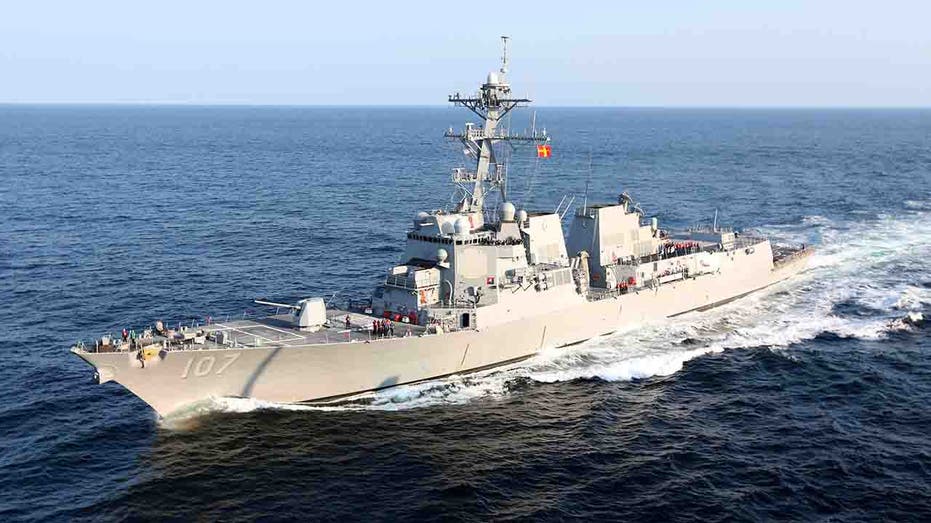










Energy Secretary Chris Wright said the U.S. Navy could begin escorting commercial vessels through the Strait of Hormuz “as soon as reasonable,” reinforcing President Donald Trump’s public statements that the United States is prepared to protect energy shipments through the strategic waterway.
But a U.S. official told Fox News Digital that American forces are not currently escorting ships through the Strait and declined to speculate on future operations, making clear that no convoy mission has yet been launched.
“As soon as it’s reasonable to do it, we’ll escort ships through the straits and get the energy moving again,” Wright said on Fox and Friends Friday.
The renewed signaling comes as commercial traffic through the strait has thinned sharply following attacks on tankers and soaring war-risk insurance costs, raising pressure on global energy markets and Gulf producers that rely on the narrow corridor for oil and liquefied natural gas exports.
HORMUZ ERUPTS: ATTACKS, GPS JAMMING, HOUTHI THREATS ROCK STRAIT AMID US-ISRAELI STRIKES
Only nine oil tankers, cargo and container ships have crossed the strait since Monday, according to MarineTraffic data analyzed by Agence France-Presse, after three vessels were attacked over the weekend.
At least three tankers and a vessel carrying gas have transited the chokepoint since the strikes, according to Agence France-Presse.
The comments come as commercial shipping through the strait has sharply declined following attacks on tankers and soaring war-risk insurance costs that have deterred vessels from transiting the narrow corridor between Iran and Oman.
The Strait of Hormuz normally handles roughly 20% of the world’s crude oil and about one-fifth of global liquefied natural gas exports, according to the U.S. Energy Information Administration, making even a temporary disruption a serious concern for global energy markets and Gulf producers that rely on the passage to move supplies to Asia and Europe.
Several commercial vessels have been struck since the start of Operation Epic Fury, heightening security concerns for shipowners and insurers. Industry analysts say war-risk premiums have surged, and some coverage has become difficult to secure, prompting tankers to anchor outside the Strait rather than risk transit.
Despite the political signaling about potential naval protection, the U.S. military has not confirmed any escort operation.
A U.S. official told Fox News Digital Friday: “We are not escorting ships through the Strait of Hormuz and we will not speculate on future operations.”
TRUMP RALLIES DEFENSE TITANS TO SURGE WEAPONS OUTPUT AS IRAN WAR RAGES
The gap between policy signaling and operational execution underscores the delicate balance facing Washington. Escort missions would require U.S. warships to operate in close proximity to Iran’s coastline in a narrow and heavily surveilled waterway, increasing the risk of direct confrontation.
Iran, for its part, has stopped short of declaring a closure of the strait while leaving the door open to escalation.
Iran has “no intention” of closing the Strait “right now,” Iranian Foreign Minister Abbas Araghchi said in an interview with NBC News Thursday.
He added, “as the war continues, we will consider every scenario.”
Araghchi also suggested commercial ships were avoiding the passage out of fear of being struck “by either side,” and said international oil tankers were not targets for Iran.
Even without a formal closure, the measurable reduction in ship traffic is placing real pressure on global markets and Gulf economies. Crude prices have risen amid concerns that prolonged disruption could tighten supply, particularly for Asian buyers dependent on Gulf exports.
Trump has publicly downplayed concerns about rising gasoline prices in the United States.
“They’ll drop very rapidly when this is over, and if they rise, they rise, but this is far more important than having gasoline prices go up a little bit,” he told Reuters.
The administration’s posture suggests it is prepared to tolerate short-term energy price volatility while signaling readiness to intervene militarily if commercial shipping cannot resume safely on its own.
For now, however, the Strait of Hormuz remains open but under strain — a critical artery of the global economy operating in a climate of active attacks, rising insurance costs and escalating rhetoric between Washington and Tehran.
US signals readiness to escort tankers through Hormuz as traffic thins but no mission launched