











Christa Pike’s attorney said she is still alive a day after she survived two doses of lethal injection drugs on Wednesday. The inmate is in critical condition and is receiving life-saving medical care, her legal team told reporters Thursday afternoon.
Tennessee Gov. Bill Lee has since paused executions in the state.
Pike, 50, remained alive and snoring loudly after being given two doses of pentobarbital, her attorneys and other witnesses said. She was subsequently taken to a hospital.
Lee ordered “a comprehensive, third-party review to determine exactly what occurred” and said that another scheduled execution later this year had been paused.
“There are very few answers this morning. It’s very early,” Lee told reporters Thursday morning. “There are a lot of questions. The people of our state deserve to have those questions answered.
“This is a tragedy. There is no one who wanted what happened last night to happen. It’s deeply disturbing to me that this has happened in this state.”
May Martinez, the mother of Pike’s victim, Colleen Slemmer, told NBC News the execution attempt had been a “mess,” adding, “They didn’t say anything, and then, all of a sudden, they asked all the victims to leave. We didn’t know anything until we got up to the office and saw the commissioner. And he said that it didn’t work … and she’s on her way to the hospital.”
In a statement posted on Facebook, Sen. Marsha Blackburn called for the state to return to the electric chair as a means of execution. “This situation is tragic,” she said. “Christa Pike should have been executed long ago. Now, this botched process is extending the pain for the family of Colleen Slemmer. While there should be a thorough review of what happened and why the process failed, the answer is simple: bring back the electric chair and deliver justice for these victims swiftly.”
Pike had been scheduled for execution at 10 a.m. Wednesday for killing Slemmer in 1995, at the age of 18. She would have been the first woman executed in Tennessee in more than 200 years.
An appeals court stopped the lethal injection just an hour before it was to start, a stay that was subsequently overturned by the U.S. Supreme Court.
Media witnesses said officials raised the curtains to the execution chamber at 7:27 p.m., showing Pike strapped to a gurney. “I’m going to leave this world the way I spent most of my life, and that is in love,” she said in her “last” words.
However, Pike remained conscious after the first dose. Nashville Banner reporter Steven Hale said she lifted her head off the gurney at 7:54 p.m. She also reportedly asked prison officials if her arm was supposed to feel that way.
Tori Gessner, a journalist with WKRN News 2 in Nashville, said Pike was seen pointing at her arm and asking, “Does this happen like that?”
By 8:26 p.m., witnesses reported that the second dose of pentobarbital had been administered.
Pike continued to be heard snoring behind the closed curtain until the microphone was cut off at 8:53 p.m. At that time, an announcement was made to escort media witnesses out of the area.
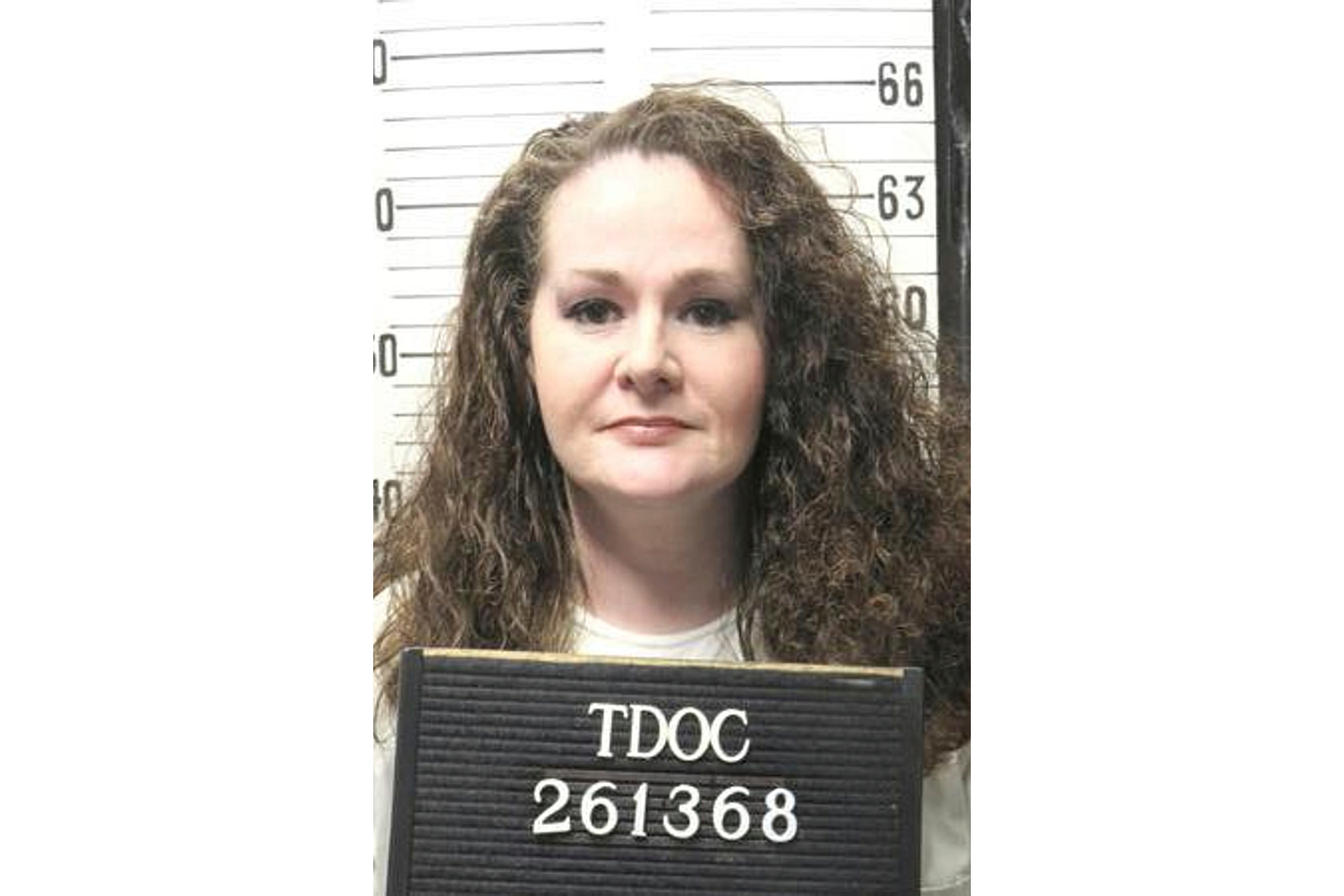
Pike’s legal team said in a statement to the Tennessean newspaper, “Tonight the State of Tennessee once again failed to carry out a lawful execution.
“We take no pleasure in being right, but the concerns raised by Ms Pike proved to be true: difficult vein access, blown veins, degraded pentobarbital, no emergency medical care available when things inevitably go wrong, all under a protocol that remains veiled in secrecy.”
Gov. Lee said he had paused another execution scheduled for Dec. 3 this year. “Carrying out a lawfully imposed sentence is among the state’s most serious responsibilities, and the people of Tennessee expect it to be done in a manner that is not only legal and constitutional, but is effective,” he said.
Robin M. Maher, executive director of the Death Penalty Information Center, said what Pike experienced was “singular and unparalleled.”
Seven other people have survived medical problems caused by an execution team’s failure to access a vein to administer lethal injection drugs, but no one has remained alive after receiving the drugs used in such executions, she said.
“I’ve witnessed, I believe, five executions in Tennessee,” Gessner said. “Nothing about today was normal, typical at all, and the court delay was just the tip of the iceberg.”
The Tennessee Department of Correction said that it “followed every step of the state’s lawful, established execution protocol approved by the attorney general’s office.”
The state’s execution protocol calls for a secondary set of drug syringes to be administered “if the inmate is not deceased” after the first set. It does not specify what happens if the subject is still alive after the second set.
Lawyers for Pike filed an emergency motion late Wednesday with the Tennessee Supreme Court seeking to immediately halt and stay the execution, saying she was in “unnecessary agony” and that the execution was violating her right to be free from cruel and unusual punishment. They also filed motions in the Sixth Circuit and a district court.
Pike was sentenced to death in 1996 after being convicted of first-degree murder of Colleen Slemmer the previous year on the University of Tennessee Agricultural campus.
According to legal documents filed with the Supreme Court, Pike “tortured, and killed Colleen Slemmer” on Jan. 12, 1995 because Pike “just felt mean that day.” Pike is reported to have cut Colleen’s throat multiple times and crushed her skull with a piece of asphalt.
Pike was also convicted of attempted first-degree murder after trying to strangle fellow inmate Patricia Jones in 2001.
How common are botched executions?
According to the Death Penalty Information Center (DPI), there have been 64 well-known botched execution attempts between 1982 and the first half of 2026 across the U.S. Most of these were executions that went wrong in some way, but still ended in death. It acknowledges that the number is an approximation. It has listed the individual cases on its website.
Of those 64, the DPI says seven execution attempts resulted in failure. It said the execution of Tennessee inmate Tony Carruthers — which failed when staff were unable to find a vein to administer a lethal drug — was the most recent it had documented before Pike.
The DPI, which says it does not take a position on the death penalty itself but is critical of problems in its application, cites figures showing that, historically, around 3% of attempted executions between 1890 and 2010 were flawed. Lethal injection has drawn particular scrutiny, with 7.2% of attempted executions being botched, the DPI said, compared with the rate of 3.15% across all methods, including electrocution, hanging and gas.
Experts have pointed to difficulties establishing intravenous lines, questions about the drugs used and the ethical role doctors can play in executions, since their ethics code requires them to swear to preserve life.
Such figures on botched executions have been questioned by some, including Michael Conklin, an assistant professor of business law at Texas A&M University–Central Texas. In a 2020 paper, he argued that some of the cases classified as botched attempts included those in which the prisoner resisted, those in which there were difficulties inserting the IV, and those in which prison officials opened the curtain too early.
The state of Tennessee has experienced recent issues that predate Pike’s case.
In April 2022, Lee called off the execution of Oscar Smith about an hour before it was scheduled to begin after the state discovered that its lethal injection drugs had not been properly tested. An independent investigation found that the state had repeatedly failed to follow its own drug-testing protocols between 2018 and 2022.
Tennessee then revised its protocol, resuming executions in May 2025 and using a single, lethal drug, pentobarbital.
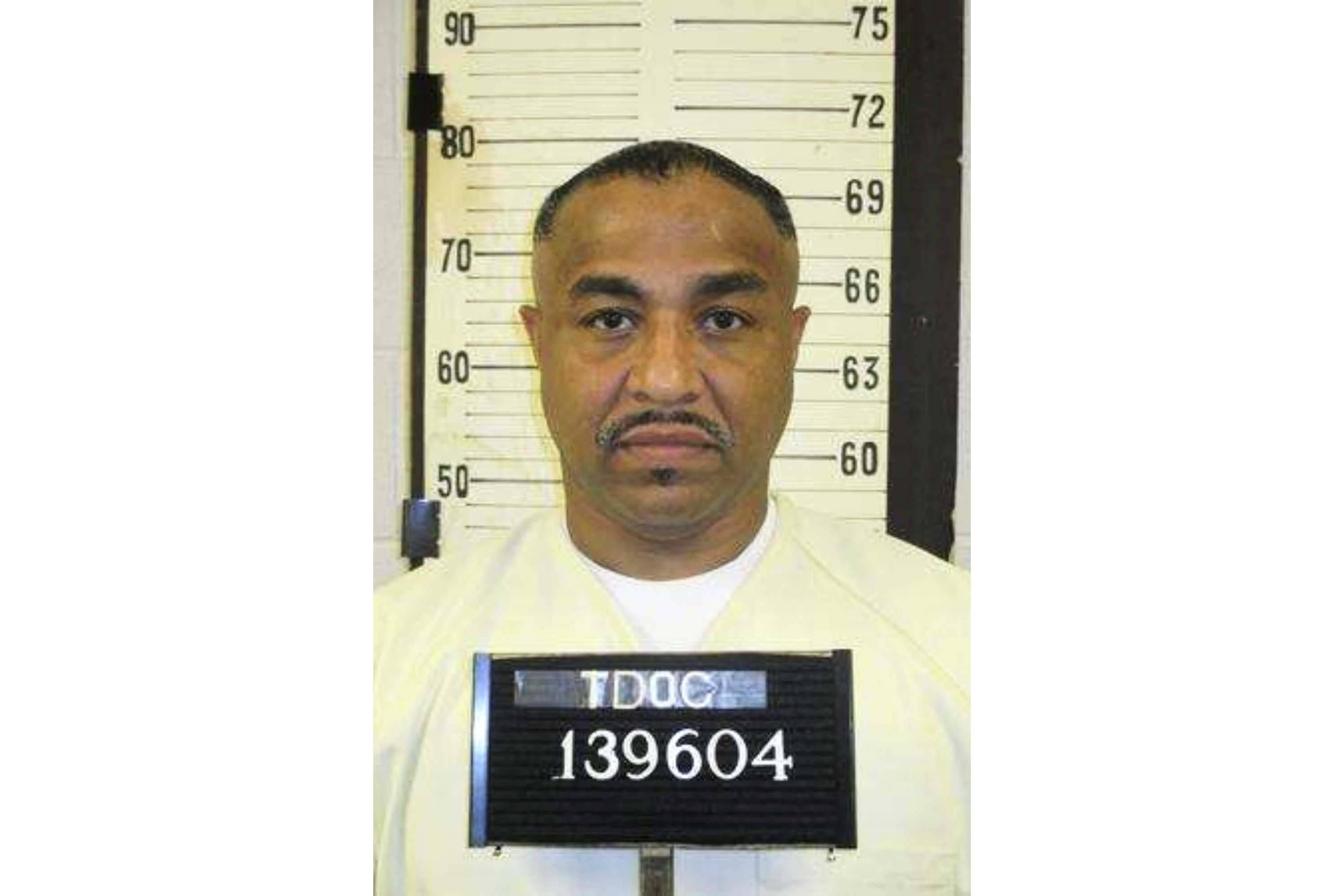
Pike’s failed execution was Tennessee’s second this year. Carruthers, who was convicted of the kidnapping and murders of three people in Memphis, was scheduled to be executed on May 21, 2026, but officials abandoned the attempt after they were unable to establish the intravenous access needed to administer the drug. The ACLU, which was part of his legal team, said witnesses reported more than an hour of attempts to establish a line while Carruthers groaned in pain.
Families of victims, however, may feel differently. The family of Slemmer, Pike’s victim, traveled to Nashville expecting to witness the execution. Her mother, May Martinez, told the Associated Press she had waited decades to see it happen, “Every time I think about it, I think about Colleen feeling that pain and trying to get up and run,” she said.
There were 47 executions in 2025, according to the DPI, higher than the recent average of fewer than 30 per year. These included the lethal injection of South Carolina inmate Marion Bowman, who received twice the intended drug dose, and Tennessee inmate Byron Black, who reportedly showed sustained cardiac activity for nearly two minutes after prison staff pronounced him dead.
This article originally appeared on Yahoo News at https://www.yahoo.com/news/us/article/tennessee-death-row-inmate-christa-pike-survives-2-doses-of-execution-drugs-081613268.html yahoo.com/news Top Stories