










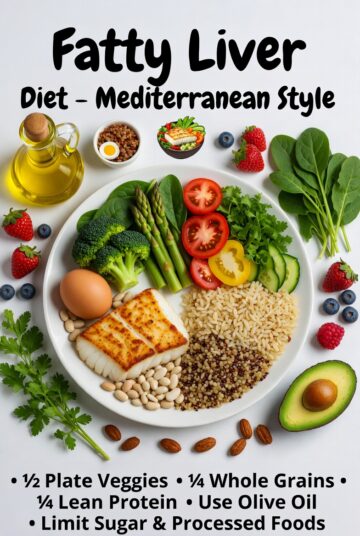
A fatty liver diet (for metabolic dysfunction-associated steatotic liver disease, or MASLD, formerly NAFLD) focuses on reducing liver fat, improving insulin sensitivity, and supporting overall liver health. Emphasizes whole, plant-based foods, healthy fats, and fiber while limiting added sugars, refined carbs, saturated fats, and processed items.
A fatty liver diet (for metabolic dysfunction-associated steatotic liver disease, or MASLD, formerly NAFLD) focuses on reducing liver fat, improving insulin sensitivity, and supporting overall liver health. The most consistently recommended approach across major health sources is the Mediterranean diet, which emphasizes whole, plant-based foods, healthy fats, and fiber while limiting added sugars, refined carbs, saturated fats, and processed items.
Even modest weight loss (5–10% of body weight) through diet and exercise can significantly improve or reverse fatty liver, but the Mediterranean pattern helps independently of weight loss by reducing inflammation and liver fat accumulation.
Key Principles of a Fatty Liver Diet
- Prioritize: Vegetables, fruits, whole grains, legumes, nuts, seeds, olive oil, fatty fish, and lean/plant proteins.
- Limit or avoid: Added sugars (especially fructose from sodas and juices), refined carbohydrates, saturated fats, red/processed meats, fried foods, and highly processed items.
- Alcohol: Minimize or avoid completely, as it can worsen liver damage.
- Other supports: Up to 3 cups of coffee daily (unsweetened) may offer protective benefits for the liver. Stay hydrated with water, unsweetened tea, or coffee. Include regular physical activity (e.g., 30+ minutes most days).
- Portion guidance: Fill half your plate with non-starchy vegetables, one-quarter with lean protein or plant-based options, and one-quarter with whole grains or starchy veggies in moderation. Use olive oil (up to 3–4 tablespoons daily) as your main fat.
Foods to Eat More Of
- Vegetables (aim for 3+ servings daily): Broccoli, spinach, asparagus, carrots, kale, bell peppers, tomatoes, leafy greens. Non-starchy options are ideal.
- Fruits (2+ servings daily): Berries, apples, citrus, cherries—whole fruits over juices.
- Whole grains: Oats, brown rice, quinoa, barley, whole-grain bread or pasta.
- Healthy fats: Extra virgin olive oil, avocados, nuts (especially almonds, walnuts), seeds (chia, flax), olives.
- Proteins: Fatty fish (salmon, mackerel, sardines, tuna) 2+ times per week for omega-3s; poultry, eggs, legumes (beans, lentils, chickpeas), tofu, low-fat Greek yogurt or cottage cheese.
- Herbs/spices: Garlic, turmeric, and flavorful seasonings instead of salt.
Foods to Limit or Avoid
- Sugary drinks and foods (soda, fruit juice, candy, sweetened cereals, desserts).
- Refined carbs (white bread, white rice, pastries, chips).
- Saturated and trans fats (fatty cuts of red meat, butter, full-fat dairy, fried foods, processed snacks).
- Red and processed meats (beef, pork, bacon, sausage, deli meats)—limit to occasional small portions.
- Highly processed foods (frozen meals, fast food, items with added salt/sugar).
- Excessive salt (aim for under 2,300 mg daily).
Sample Daily Meal Ideas (Mediterranean-Style)
These draw from evidence-based examples and can be adjusted for your calorie needs.
- Breakfast: Veggie omelet (spinach, tomatoes, mushrooms) with feta or egg whites + a slice of whole-grain toast with avocado. Or Greek yogurt with berries and a sprinkle of nuts/seeds.
- Lunch: Grilled chicken or bean salad with mixed greens, cucumbers, tomatoes, olives, and olive oil-lemon dressing. Add quinoa or barley.
- Dinner: Baked salmon with asparagus or broccoli and brown rice or sweet potato. Drizzle with olive oil and herbs.
- Snacks: Carrot/celery sticks with hummus; a handful of almonds; apple or berries with a small portion of low-fat cheese; or vegetable plate with olive oil dip.
Example full day:
- Breakfast: One-egg omelet with spinach, tomatoes, and feta + multigrain toast with avocado.
- Lunch: Bean and barley soup + spinach salad + strawberries.
- Snack: Veggies (carrots, cucumber, bell pepper) + handful of almonds.
- Dinner: Baked salmon, brown rice, and asparagus.
- Dessert (optional): Fresh berries with low-fat Greek yogurt.
Additional Tips for Success
- Start gradually: Swap one unhealthy item (e.g., soda for water or coffee) at a time.
- Read labels: Watch for hidden sugars and unhealthy fats in packaged foods.
- Combine with lifestyle changes: Pair diet with exercise (a mix of cardio and strength training) and manage related conditions like diabetes or high cholesterol.
- Consult professionals: Work with a doctor or registered dietitian for personalized advice, especially if you have other health issues. Monitoring via blood tests or imaging may be needed.
This approach is supported by organizations like Mayo Clinic, NIDDK, and liver foundations, with strong evidence for the Mediterranean diet in reducing liver fat and inflammation. Results vary by individual, so consistency matters more than perfection. If symptoms persist or worsen, seek medical care promptly.